
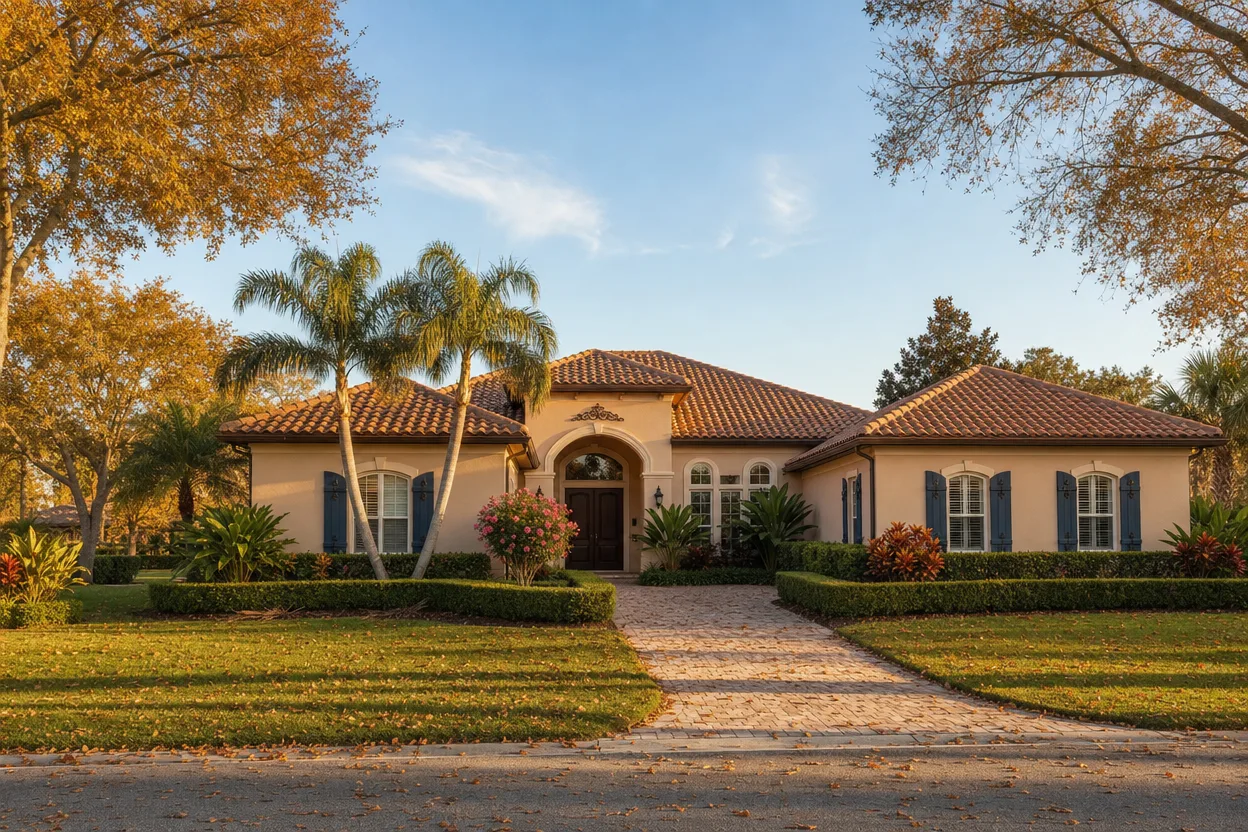
When Is the Best Time to Sell a Home in Orlando? Fall vs. Spring, Explained

Arturo Matamoros – Orlando Realtor
"Should I list my Orlando home now, or wait until spring?"
I hear that question a lot this time of year. The holidays are right around the corner, showings start to feel slower, and it's tempting to put everything on pause until the weather warms up and the market picks back up.
Here's the short answer: spring is historically the strongest selling window in Orlando, but that doesn't make fall a bad time to sell. In the current Central Florida market, the price difference between selling in the fall and waiting for spring is much smaller than most people assume, roughly 1% to 2% under current conditions. For some sellers, fall is genuinely the smarter move.
This guide walks through what the data actually says about the Orlando fall and spring markets, what the tradeoffs are, and how to decide what's right for your situation.
How Seasonal Is the Orlando Housing Market, Really?
Every market has a rhythm, and Central Florida is no exception. Local and national analysis, including work from the Orlando Regional REALTOR Association and Florida Realtors, points to a consistent pattern:
- Late winter through early summer (roughly March to July) is the peak window. Buyer activity, showings, and pricing power build from late winter and peak in spring, when more homes close at or above asking than in any other quarter.
- Fall (September through November) is a slower phase. Fewer new listings hit the market, buyer activity dips, and homes tend to sit a bit longer.
- The holiday freeze runs roughly mid-November through January. Showings drop and buyer motivation hits its lowest point of the year before activity resumes in February.
What has changed in 2025 and 2026 is the size of that swing. A few years ago, the difference between a spring listing and a fall listing in Orlando could be dramatic. Today, with more balanced supply and demand, the seasonal gap has narrowed. The market is less volatile, which means timing matters less than it used to, and things like price, condition, and location matter more.
What the Fall Market Actually Looks Like in Orlando
Selling in the fall isn't the same as selling during a dead period. It's quieter, sure, but quieter cuts both ways.
- Less competition. Fewer sellers list in the fall, which means your home competes against a smaller pool of similar listings.
- Serious buyers. The people touring homes in October and November tend to be motivated. They're not browsing for fun.
- Relocation buyers are active. Out-of-state and snowbird buyers often start their Orlando searches in late fall and winter, even when they plan to close in spring or summer.
- Longer days on market. Homes do tend to sit longer in the fall. In Orange County, the median time on market was around 71 days as of August 2026, according to St. Louis Fed data.
What the Spring Market Actually Looks Like
Spring is when the largest number of buyers shows up, and that's not an accident. Families want to settle in before the next school year, the weather makes house hunting easier, and a fresh wave of new listings draws more attention to the market as a whole.
- The biggest buyer pool of the year. More showings, more offers, and more competition for well-priced homes.
- Historically the strongest pricing window. Realtor.com's Best Time to Sell analysis has suggested that spring listings can see prices roughly 5% to 6% higher than other seasons in a typical year.
- More competition from other sellers. Spring brings more new listings, so your home also has to work harder for attention.
The key phrase there is "in a typical year." In the current balanced market, the spring advantage has moderated. Orlando Regional REALTOR Association data for August 2026 showed a median home price around $400,000 in the metro with roughly five months of supply, a market where buyers have more choices and a meaningful share of listings carry price reductions. In this kind of market, the estimated fall-to-spring price difference is closer to 1% to 2%, not the double-digit swings of a few years ago.
So, Should You Sell Now or Wait Until Spring?
The honest answer is that it depends less on the calendar and more on your situation. Let me give you a practical framework.
Sell now if:
- Your timeline says move, whether that's a new job, a growing family, or a planned relocation. Waiting costs months you may not have.
- Your home is already in good shape. If it's show-ready now, there's no reason to park it for six months.
- You want less competition. Fewer listings in the fall means your home stands out more in search results and at showings.
- You're selling and buying at the same time and need the coordination. That's one of the most common scenarios I help with.
Wait until spring if:
- You genuinely don't need to move for many months and want the widest possible buyer pool.
- Your home needs real prep work, and you'd rather spend the winter renovating and decluttering than selling in a hurry.
- You're flexible on timing and prefer the busy-market energy of spring showings.
Here's what I tell clients: the best time to sell is when your home is ready and your life timing lines up. A well-priced, well-presented home sells in the fall. An overpriced or unprepared home struggles in the spring. The market helps, but it doesn't rescue you.
Does Selling in the Fall Really Mean Leaving Money on the Table?
Let's do the math. If the fall-to-spring difference is roughly 1% to 2% in current conditions, on a $400,000 home that's about $4,000 to $8,000. That's real money, and you shouldn't ignore it.
But waiting has costs too. While you wait, you're paying the mortgage, property taxes, insurance, HOA fees, utilities, and upkeep. Those carrying costs add up quickly, and they can easily eat a large chunk of that 1% to 2% difference. If you're also buying your next home and covering two households for part of the overlap, the math tilts even further.
Then there's the risk side. Waiting means betting that the market six months from now looks like the market today. Nobody can guarantee that. Sometimes the right move is to lock in today's conditions rather than gamble on next spring.
This isn't a one-size-fits-all calculation, which is exactly why it's worth talking through with a local advisor before you decide. I go through the full pricing picture in my guide to pricing your Orlando home to sell.
The Holiday Season Question
The stretch from mid-November through mid/late January is the slowest of the year for Orlando real estate. Showings drop, and many buyers pause their search until the new year.
Does that mean you should pull your home off the market for the holidays? Not necessarily. The buyers who do look during the holidays tend to be the serious ones, and an actively listed home catches the people who are just starting their search. Some sellers list in late fall specifically so their home is already in front of the market when activity ramps back up in February and March.
A middle path: if your home is listed when the holidays hit, keep it listed, keep it show-ready, and let your agent's marketing keep working. What you generally don't want is to let the home sit with stale photos, fading curb appeal, and a quiet marketing plan through the slowest months of the year.
How to Make the Most of a Fall Sale
If you decide to sell now, a few moves make the fall market work harder for you:
- Price it right from day one. In a balanced market, the first two weeks bring the most attention. Overpricing and dropping the price later is the most expensive mistake I see. The numbers behind a strong starting list price are in this guide.
- Get the presentation right. Staging and decluttering matter even more when there are fewer buyers, because the ones touring are comparing you closely. See my room-by-room staging guide.
- Fix the small stuff. Buyers notice what's worn. Tackle the high-value repairs before you list, not after the inspection. If you're wondering which projects pay off, check the improvements that actually add value.
- Schedule smart. List in September or early October to catch the fall buyer wave before the holiday freeze, or time a fresh listing for the first weeks of the new year.
And if your home is already listed and not getting the attention you expected, the issue is usually price, condition, or marketing, not the month. These seven reasons buyers may be passing it up cover the usual suspects.
Frequently Asked Questions About Selling in Orlando's Fall and Spring Markets
Is Fall a good time to sell a house in Orlando?
Yes, it can be. Fall brings fewer competing listings and motivated buyers. In the current balanced market the fall-to-spring price difference is small, roughly 1% to 2% as of October 2026, so a well-priced fall listing can do very well.
How much more do homes sell for in spring vs. fall in Orlando?
Historically, Realtor.com's Best Time to Sell analysis suggested spring listings could see prices roughly 5% to 6% higher in a typical year. In the moderated 2025 and 2026 market, the estimated difference has been closer to 1% to 2%, with longer days on market across the board.
What is the slowest time to sell a home in Orlando?
The holiday freeze, roughly mid-November through January, is the slowest stretch of the year. Showings drop and buyer activity hits its yearly low. Activity typically resumes in February and ramps into the spring peak.
Should I wait until Spring to sell my Orlando home?
It depends on your timeline, your home's readiness, and whether you can comfortably carry the costs of waiting. If you need to move on a schedule or your home is already market-ready, waiting rarely makes sense. If you have time and your home needs work, the winter can be a productive prep window.
The Bottom Line
The Orlando market isn't as seasonal as it used to be, but the rhythm is still real: spring brings the most buyers, fall brings the least competition, and the current balanced market has narrowed the price gap between them to roughly 1% to 2%.
What matters more than the month on the calendar is whether your home is priced right, presented well, and timed to your life. If your home is ready and your timeline says go, don't let a calendar convince you to wait six months. And if you're not sure, that's a conversation worth having with a local advisor who knows your street, not just your zip code.
One note on sourcing: the market figures in this post reflect publicly available data as of October 2026, including the Orlando Regional REALTOR Association's housing market narrative and St. Louis Fed data on Orange County days on market. Markets move, so treat this as context for a conversation, not a guarantee.
To be clear about my role: I'm a licensed real estate advisor with eXp Realty, not a lender, appraiser, or tax professional. The timing decision is yours, and my job is helping you weigh it honestly.
If you're trying to decide whether to sell now or wait, that's exactly what a discovery call is for. We'll look at your home, your timeline, and your numbers, and come up with a plan you can feel good about. No pressure.
All the best,
Arturo
Arturo Matamoros – Orlando Realtor
Helping You Build Wealth Through Real Estate
Related Articles
How to Price Your Home to Sell in Orlando
What a CMA includes, why overpricing backfires, and how to pick a list price that attracts buyers.
SellingHow to Sell Your Orlando Home While Buying the Next One
How to handle the timing, finances, and logistics of selling and buying at the same time.
SellingWhy Isn't My Orlando Home Selling?
Seven common reasons buyers may be passing your home up, and what to do about each one.