
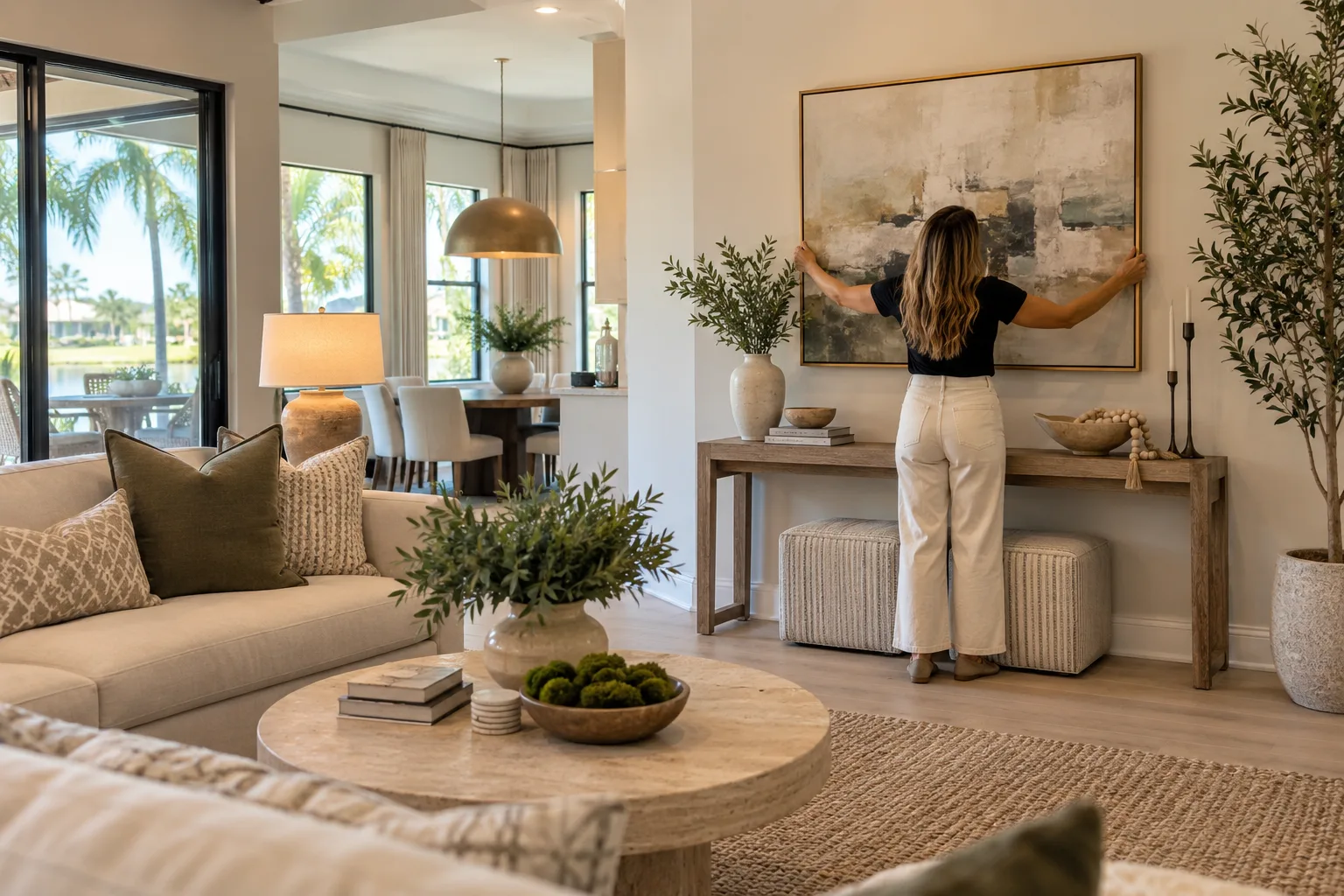
How to Stage Your Orlando Home to Sell: A Room-by-Room Guide

Arturo Matamoros – Orlando Realtor
You’re getting ready to sell your Central Florida home, and somewhere between talking about price and marketing photos, your agent brings up staging.
Your first thought might be… Do I really need that? After all, your furniture already looks fine. Or maybe you’re thinking it would be easier to leave the home empty so buyers can “picture themselves living there.” Doesn’t everyone do that?
Here’s the thing: what feels like Home to you, and what helps a buyer fall in love with someone else’s home, aren’t always the same thing.
So, what does home staging actually involve? Is it worth the money? What does home staging cost in Central Florida, and how much of it can you realistically do yourself?
Here's the short answer: staging is the practice of making your home easy for buyers to picture as their own. It doesn't always require renting furniture or hiring a designer, although both are effective options. In the Orlando area, a full professional staging project typically start around $1,500 and can go up to several thousand dollars depending on your needs and the size of the home. The payoff is measurable: in the National Association of Realtors' 2025 Profile of Home Staging, 49% of sellers' agents said staging reduced the time a home spent on the market, and 29% reported that staging increased the dollar value offered by 1% to 10%.
Whether you hire help or go the do-it-yourself route, this guide walks through the whole thing room by room.
Note: staging costs vary by home size, condition, and the stager you choose. The figures below reflect typical Orlando-area pricing as of October 2026 and are estimates, not quotes.
What Is Home Staging, Really?
Staging is presentation, not renovation. It's the process of arranging a home so its best features stand out and buyers can see themselves living there. A staged home feels clean, uncluttered, neutral, and welcoming. An unstaged home, even a lovely one, asks buyers to do the imagining themselves, and many of them simply will not.
Staging comes in three levels, and they're very different in cost:
- Do-it-yourself staging: decluttering, deep cleaning, rearranging furniture you already own, and adding a few inexpensive touches. Cost: your time plus a small budget for supplies.
- Partial staging: a professional consultation plus a few rented pieces to fill gaps, like a dining table for an empty dining room or a bed for a vacant primary bedroom.
- Full staging: a stager brings in furniture, art, and accessories, usually for a vacant home or one whose current furniture doesn't fit the target buyer.
Most occupied homes benefit most from the first level. Most vacant homes need at least some furniture, because an empty room reads as smaller and colder than a furnished one.
Does Staging Actually Help Homes Sell Faster?
Yes, and the numbers come from the real estate industry's own research. The National Association of Realtors' 2025 Profile of Home Staging surveyed more than 1,200 real estate professionals and found:
- 49% of sellers' agents said staging reduced how long the home spent on the market.
- 29% of agents said staging increased the dollar value offered by 1% to 10% compared with similar unstaged homes.
- 83% of buyers' agents said staging made it easier for buyers to envision the property as their future home.
The same report ranked which rooms matter most to buyers: the living room (37%), the primary bedroom (34%), and the kitchen (23%). That's a useful prioritization when you're deciding where to spend your staging energy and budget.
Where to Start: Declutter Before You Decorate
Staging is 80% subtraction. Before you buy a single throw pillow, the house needs to feel lighter and more open. Work through these steps first:
- Pack away personal items. Family photos, kids' artwork, trophies, and collections should come down before showings. Buyers want to picture their own family in the home, not yours.
- Clear counters. Kitchen counters should hold only a few purposeful items: a coffee maker, a utensil crock, maybe a small bowl of fruit.
- Remove excess furniture. If a room feels crowded, move pieces out. You want clear walking paths and visible floor space. Utilize a garage for storing excess furniture, or consider a short term storage unit.
- Thin out closets. Buyers open closet doors, and an overstuffed closet reads as too little storage. Keep closets around 70% full so they look roomy. A few storage bins can help a lot. Store your overflow bins in a garage or attic to keep it out of sight.
- Store the seasonal overflow. In Central Florida that often means holiday decor, extra linens, and the furniture that only gets used twice a year.
A good rule of thumb: if you haven't used it in a year, it can live in a storage bin until after the sale. You're packing early either way, so you might as well get a head start on the move.
Deep Cleaning and Small Repairs: The Non-Negotiables
No amount of furniture arranging covers up a dirty home. Buyers notice baseboards, grout, ceiling fans, and light switches. Before you stage anything, budget for a serious deep clean, and fix the small stuff that makes a home feel neglected:
- Touch up paint on walls, doors, and trim, especially where kids and pets have left marks.
- Replace burned-out light bulbs with matching bulbs and make sure all switch plates are clean and matching.
- Fix dripping faucets, loose cabinet hardware, and doors that stick.
- Have the AC serviced and change the filter, a big one in Florida.
- Clean windows inside and outside, and let in that natural light.
These are the same small items that come up in a home inspection, so knocking them out now avoids negotiations later. For the bigger picture on what is worth fixing before you list, see the home improvements that actually add value and the ones that don't.
Room-by-Room Staging Checklist
Here's the practical walkthrough, starting outside and working your way in.
Curb Appeal and the Front Door
Buyers form an impression in the first few seconds, often from the car. Mow, edge, and weed. Pressure-wash the driveway, walkway, and front porch. Trim bushes away from windows and the walkway. Repaint or replace a tired front door, and make sure the door hardware is clean. Add a simple welcome mat and a couple of potted plants. The front door is the handshake of the whole sale.
Living Room
The living room is the room buyers care about most, per the NAR report, so it deserves the most attention. Arrange seating in a conversation-friendly layout, pull furniture off the walls a few inches, and make sure the room's best feature, often the natural light or the view, isn't blocked. Remove area rugs that are too small, and keep decor neutral and minimal.
Kitchen
The kitchen sells homes, and staging it's mostly about clearing surfaces. Empty the countertops except for a few purposeful items. Clean the backsplash, the stovetop, and the inside of the microwave. Remove magnets and papers from the fridge. Set the table with simple place settings, or place a cutting board and a bowl of fruit on the island. Buyers open cabinets, so keep them tidy and about two-thirds full.
Primary Bedroom
The primary bedroom should feel like a calm hotel suite. Make the bed with crisp, neutral linens, add a couple of pillows, and remove everything from the nightstands except a lamp and maybe a book. Clear the dresser tops, and make sure the closet is organized and isn't packed. If the room has a seating area, keep it to one or two pieces.
Bathrooms
Bathrooms need to read as clean and fresh. Remove personal care items from the counters and shower. Hang fresh, matching towels, and add a new bath mat. Clean the grout, the mirrors, and the glass shower door. Replace an outdated shower curtain with something neutral. A small plant or a rolled towel adds a spa touch without clutter.
Home Office and Flex Spaces
With more buyers working remotely, a tidy home office is a real selling point. Keep the desk clear, hide cords, and remove personal paperwork. If a spare room is currently a storage room or a cluttered playroom, consider staging it as a bedroom or an office so buyers can see a purpose for it. Rooms without an obvious purpose are the ones buyers struggle to picture.
Outdoor Living: Lanai, Patio, and Pool
This is where Orlando homes stand apart. Central Florida buyers expect usable outdoor space, so treat the lanai or patio like another room. Clean the furniture, add a few cushions, and arrange it for conversation. If there's a pool, make sure the water is clear and the deck is clean, and have the equipment serviced before listing. In our climate, a welcoming outdoor room is often the detail that wins a buyer over.
How Much Does Staging Cost in Orlando?
Staging costs in the Orlando area vary widely depending on the level of help you choose. As of October 2026, typical figures look like this:
- Hourly staging help: roughly $110 to $130 per hour, per ProMatcher's Orlando cost report.
- Full professional staging projects: commonly $600 to $2,500, depending on home size and how many rooms are staged.
- Vacant home packages: a 60-day furniture rental package for an empty home usually starts around $1,500, with monthly extensions after that.
- Consultations: a professional walkthrough and written plan often runs $150 to $600.
- Virtual staging: if your home is vacant and you want listing photos with furniture added digitally, that runs roughly $29 to $39 per photo.
Compare those numbers against the NAR finding that staging can increase the dollar value offered by 1% to 10%. On a $500,000 home, even a 1% bump is $5,000, which covers a full staging project several times over. That math is why staging is usually a good investment, not an expense.
A note on sourcing: these are typical ranges from published Orlando cost reports and local stagers, and your actual quote depends on your home, your timeline, and the scope of work. Get two or three quotes before you commit. HomeGuide keeps a general national breakdown of home staging costs if you want a reference point.
Should You Hire a Professional Stager or Do It Yourself?
Do-it-yourself staging works when the home is occupied, the furniture is in good shape and roughly the right scale, and you're willing to declutter seriously. Many sellers can get 80% of the benefit with a weekend of work and a few hundred dollars of supplies.
Hire a professional when:
- The home is vacant. Empty rooms photograph poorly, and buyers struggle to judge size.
- The current furniture is dated, oversized, or mismatched.
- You're selling at a higher price point, where presentation expectations are higher.
- You simply don't have the time or the emotional distance to make it happen. Selling a home you love is personal, and a stager brings objectivity.
If you're on the fence, ask me for staging referrals. I work with Central Florida stagers whose work I've seen in person, and I can tell you honestly whether your home needs the full treatment or just a good declutter.
Orlando-Specific Staging Notes
A few things make staging in Central Florida different from the rest of the country:
- Light and heat. Open the blinds and curtains for showings, but schedule them for the cooler parts of the day. A stuffy house shows poorly no matter how it looks.
- Indoor-outdoor living. Treat the lanai, patio, and pool as selling features, not afterthoughts. In Florida, they're rooms.
- Storm protection. If your home has impact windows or accordion shutters, make sure they're visible and working. Buyers in Florida ask about storm protection.
- Tile and hard flooring. Shine it. Buyers notice grout lines and scuffs on tile floors more than almost anything else.
- Neutral over trendy. Keep wall colors and decor neutral so the widest range of buyers can picture their own furniture and style in the space.
How Staging Fits With Pricing
Staging and pricing work together. A well-staged home at the right price attracts the most showings in the first two weeks, which is when most offers come in. If the price is too high, staging can only do so much, and if the price is right, staging helps you capture the strongest offer. I walked through the full pricing strategy in how to price your Orlando home to sell, and if your home has already been sitting on the market, this list of reasons buyers may be passing it up covers the other usual suspects.
Frequently Asked Questions About Staging in Orlando
Do I have to stage my home before selling it?
No, staging is not required, and some homes sell fine without it. But the NAR's research shows staging is linked to faster sales and higher offers, and in a competitive market it's one of the few levers you control. Most sellers who skip staging do so because of time or budget, not because it doesn't work.
How much does it cost to stage a vacant home in Orlando?
A typical 60-day furniture rental package for a vacant Orlando home starts around $1,500, with monthly extensions after the initial period. Full professional staging projects more broadly run $600 to $2,500 depending on the number of rooms and the scope.
What is the most important room to stage?
According to the NAR's 2025 Profile of Home Staging, buyers' agents ranked the living room first (37%), followed by the primary bedroom (34%) and the kitchen (23%). If you're staging on a budget, start there.
Is virtual staging worth it?
Virtual staging, where furniture is added digitally to photos of an empty room, costs roughly $29 to $39 per photo and can help a vacant listing look its best online. Just be sure the photos are clearly labeled as virtually staged so buyers aren't surprised at the showing.
The Bottom Line
Staging is about removing the obstacles between a buyer and their imagination, not making your home look like a magazine spread. Declutter, deep clean, fix the small stuff, and arrange what's left so each room has an obvious purpose. In Central Florida, don't forget the outdoor rooms. Just remember, all of this will be in vain if you don’t price your home correctly from the start which allows your agent’s marketing to get your home sold faster and for more money than your competition.
To be clear about my role: I'm a licensed real estate advisor with eXp Realty, not a stager, contractor, or appraiser. The staging pros I recommend do the design work; my job is helping you decide where your prep dollars go and how they fit your timeline and your sale plan.
If you're getting ready to sell in Orlando or the surrounding counties and want a straight answer about what your home needs before it hits the market, that's exactly what a discovery call is for. We'll walk through your home's strengths, the prep list, and the pricing strategy, no pressure and no fluff.
All the best,
Arturo
Arturo Matamoros – Orlando Realtor
Helping You Build Wealth Through Real Estate
Related Articles
How to Price Your Home to Sell in Orlando
What a CMA includes, why overpricing backfires, and how to pick a list price that attracts buyers.
SellingHome Improvements That Actually Add Value
Which upgrades boost resale value in Central Florida and which are a waste of money.
SellingWhy Isn't My Orlando Home Selling?
Seven common reasons buyers may be passing your home up, and what to do about each one.